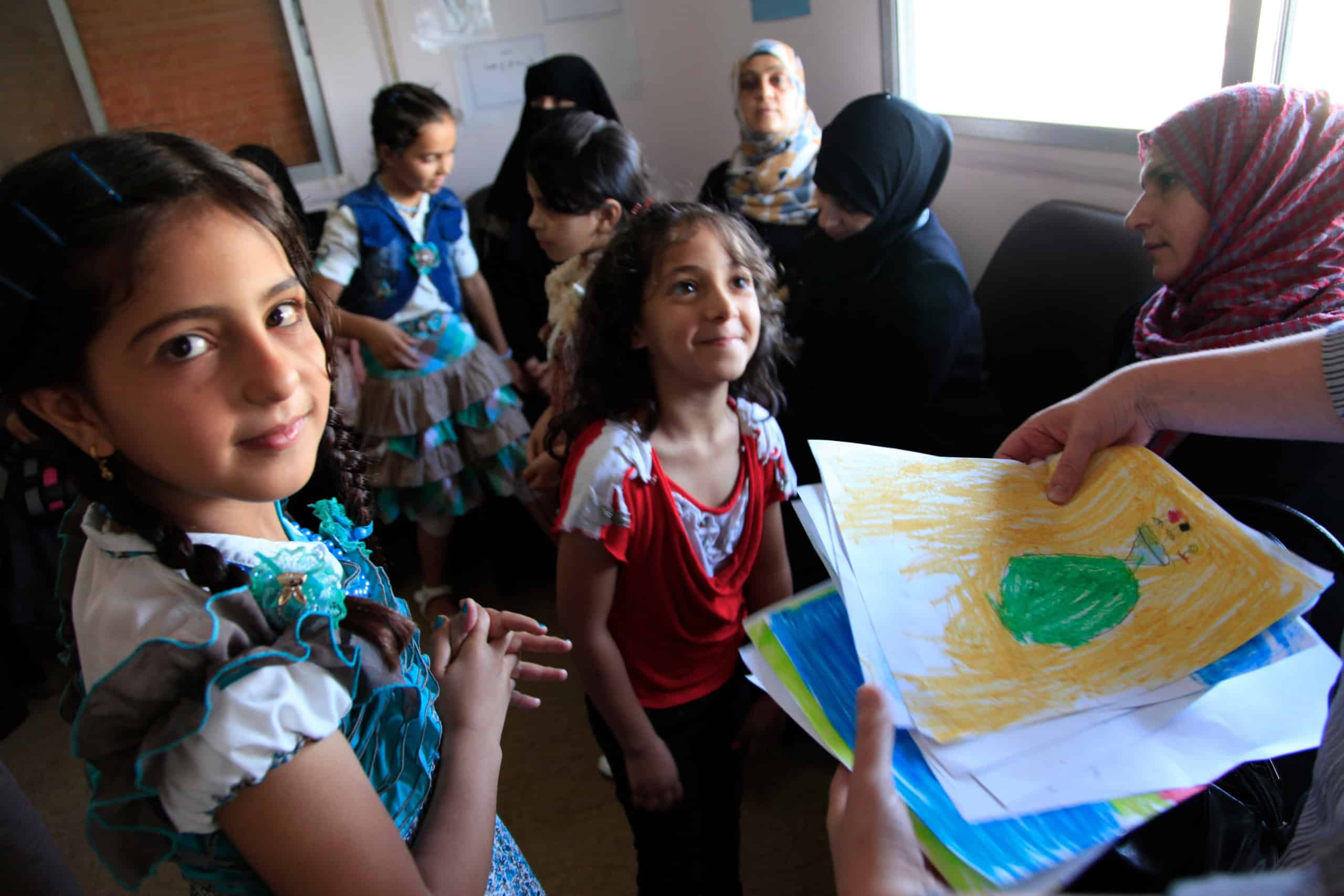
As the new school year begins, countries across the Middle East have been undertaking ambitious educational reforms, reflecting wider social and political transformations. These reforms have not emerged in a vacuum. Curriculum changes have become a central tool in shaping national identity and preparing students for modern challenges.
Globally, curricula are continually revised and reformed in response to a range of motivations and pressures, each shaped by the unique political, social, and cultural contexts of individual countries. In the Middle East, these reforms can be broadly categorized into overhauls and modifications, in line with either progressive or regressive values. From the shock of 9/11 to the upheavals of the Arab Spring, the rise of ISIS, and ambitious national visions such as Saudi Arabia’s Vision 2030, governments have increasingly recognized that textbooks are not only educational tools but also instruments for shaping national security, social cohesion, and international image.
Each method reveals something different about the country’s priorities and future trajectory. This can involve the revision of educational content, pedagogical approaches, and assessment methodologies to effectively address the dynamic needs of both society and students. These reforms are frequently initiated in response to societal transformations, technological advancements, and evolving perspectives in educational philosophy. Importantly, each country follows its own path to curricular reform, shaped by its unique political objectives. These aims are often reflected in the content being included or removed from curricula, offering valuable insight into national values and political direction; curriculum reform, in this sense, serves as a window into a country’s broader priorities and aspirations.
Within this regional landscape, the emergence of a new regime in post-Assad Syria places the country at a crossroads in redefining its identity, a process made visible through its education system. Will it align with progressive reform models that emphasize tolerance and modernization, or follow more regressive patterns marked by politicization and ideological indoctrination? Drawing on available data, this report examines the trajectory of Middle Eastern curriculum modifications to date, as compiled by IMPACT-se.
In the Middle East, curricular reform is frequently motivated by aspirations to modernize education systems, cultivate national identity and address socio-political challenges. These reforms manifest in content revision, ideological reorientation and the incorporation of new subjects. Textbook modifications span across comprehensive revisions to targeted edits, where problematic content is removed, revised or contextualized. IMPACT-se has generated extensive research into education systems, including countries within the Middle East, such as Egypt, Yemen, Saudi Arabia, Jordan and Syria. Curricular reform in these countries has occurred both in response to IMPACT-se’s findings and as part of broader, independent efforts aligned with national trends.
This piece is an analysis of the curricular changes in each of these countries, with specific reference to content identified by IMPACT-se, either as currently present in the curriculum or, in some cases, recently removed. This research often reflects the political trajectories of different countries and provides a lens through which their underlying value systems can be understood. Some countries, like Egypt and Saudi Arabia, have opted for a curriculum overhaul or specific modifications, re-establishing the curriculum along international educational standards, while others like Yemen and Jordan and the PA have enacted a curriculum overhaul or made specific changes which are more regressive.
These models of progressive or regressive overhaul and modification characterize overarching trends within the Middle East, and align with the political trajectories of each country. However, this piece will also shed light on the Syrian education system.[1]
Curriculum overhaul:
Since 2018, Egypt has been implementing a sweeping curriculum reform initiative aimed at aligning its education system with international benchmarks and instilling values of peace, tolerance, and coexistence.[2] This reform process entails the revision of textbooks spanning from kindergarten through the secondary level, with a systematic review and revision conducted for one grade level annually. The reformed textbooks have removed incitement to violence, extremism and hatred, and instead advocate for peace and tolerance principles, shared values, justice, equality and human rights.
Several specific changes to textbook content reflect a shift toward more inclusive values.[3] Antisemitic stereotypes have been removed and replaced with messages promoting tolerance and coexistence between Islam and Judaism, exemplified through the introduction of a new textbook subject titled “Values and Respect for the Other.” Passages that once glorified martyrdom in combat or praised terror attacks against Israelis have also been eliminated. However, problematic material continues to appear in unrevised textbooks for Grades 8–12, which have not yet undergone reform. These include negative portrayals of Israel, depicted as an illegitimate, colonialist entity, often omitted from maps, and narratives that present the liberation of Palestine as a religious duty. Additionally, some unrevised materials still express ambivalent or hostile views toward Jewish people, particularly within religious or historical discussions. Despite these ongoing concerns, meaningful progress can be seen in newly reformed textbooks and the selective removal of harmful content at higher grade levels, signaling genuine efforts to improve curricula, even in the absence of full-scale revisions.
For example, a Grade 3 Arabic Language textbook instructs students on the art of engaging in discussions and exchanging ideas, emphasizing the potential benefits of divergent opinions and the positive attributes of diversity. Additionally, a Christian Religious Education textbook discusses an event involving Jesus’ disciples in Jerusalem, underscoring the historical connection of Jewish people to Jerusalem. Conversely, some textbooks continue to include problematic content. A Grade 11 unrevised textbook, Egypt and Islamic Civilization, still portrays “the Jews” as a threat to the Prophet Muhammad and the early Muslim state, accusing them of using various tactics to undermine Islam, such as distorting the Prophet’s image, forming hostile alliances, and plotting assassinations. However, these textbooks are pre-reform, and so it is unsurprising that this content remains.
The below example features a Grade 5 Islamic Education textbook, which asks students to write a booklet on respecting others, including Jews, citing the Prophet and the Treaty of Medina. This excerpt exemplifies tolerance and coexistence between Islam and Judaism, replacing previous antisemitic examples, which had used Islamic stories to attack Jews.
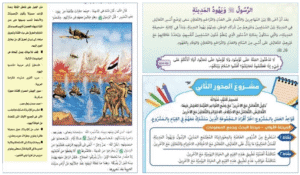
Left image: Pre-reform – Antisemitic lesson on the Yom Kippur War.
Islamic Religious Education, Grade 5, Vol. 2, 2021-22, pp. 11-14
Right image: After reform – lesson underlining tolerance and coexistence between Islam and Judaism.
Islamic Religious Education, Grade 5, Vol. 1, 2024-25, pp. 62, 79
These findings reveal that Egypt is successfully attempting to align its curriculum with international standards, but is somewhat lacking in the realm of discussing Jews and martyrdom, which remains in higher unrevised grades. These changes reflect a broader effort to modernize the education system and align it more closely with standards of peace and tolerance. In doing so, they signal a shift in Egypt’s national trajectory. The curriculum serves as a clear indicator of the country’s aspirations and the direction in which it seeks to move.
Egypt is a clear example of progression in line with international standards of education, yet curricular changes may also be manifest in regressive reforms, such as in the Houthi school system. A curriculum reform was carried out by the Houthis, who revised their textbooks to include jihadist and violent content. The Houthi slogan including “Death to America – Death to Israel” is included in numerical exercises, and children are taught of the bliss that awaits martyrs in paradise.[4] This highlights that not all curricular reforms align with international standards or promote positive, peaceful values, and instead more regressive values are evident.[5] The Houthi case thus exemplifies how educational overhauls have the capacity to steer curricula away from universal educational values and toward radicalization and militarization.
Curriculum modifications:
A second method of curricular reform is demonstrated through specific modifications. Saudi Arabia has been engaged in curricular revision since the early 2000s. The revisions have been clearly reflective of the Saudi government’s ‘Vision 2030’ which emphasizes openness, entrepreneurial spirit and patriotism.[6] Reports on the Saudi curriculum indicate substantial improvement in textbooks, with progress towards a holistic educational approach. This is evidenced by the creation of a new school subject entitled ‘Critical Thinking,’ which indicates its movement towards a more tolerant and open-minded curriculum.
For example, accusations against Christians and Jews of intentionally distorting scripture have been removed, and maps previously labelling Israel as Palestine now omit country names, although the curriculum remains firmly dedicated to the Palestinian cause alone.[7] A Grade 12 Social Studies textbook, which taught that “Zionists” deliberately tried to burn down the Al-Aqsa Mosque, was removed in 2023, and a passage in a high school Social Studies textbook titled “The Attempt to Create the Zionist Entity” was changed to “The British Mandate for Palestine.” Further to this, references to the Protocols of the Elders of Zion and presentations of Jews using women and drugs have been removed.
Other changes are evident in attitudes towards atheism, where textbooks no longer teach students that the phenomenon is more common among non-Muslims due to their “pride and arrogance,” as was taught in 2022. The explanation that atheism may have occurred only in Muslim “souls that the devil has taken over” was also removed. However, students still learn that communication with atheists as well as psychological disorders may lead to atheism, which is presented as dangerous to society. Homophobia has been reduced in the curriculum, although some examples remain. Overall, these curricular changes reflect attitudes of religious inclusivity and tolerance, propounded by the ‘Vision 2030’ programme. Conversely, Grade 3 students are taught that house chores are primarily the responsibility of the mother, which is demonstrative of a more conservative attitude to gender roles at the heart of Saudi society, although some positive changes have occurred, including the removal of an example stating that women must obey their husbands.
Regressive Curriculum Changes
While Saudi Arabia serves as evidence of a more progressive form of modification, curricular changes in Jordan exemplify regressive modifications. In the wake of the ISIS era, Jordanian society was presented with an opportunity to reassess and reshape its core values. This moment led to the establishment of a governmental committee in 2015, which initiated significant textbook reforms. These revisions serve as a reflection of Jordan’s evolving national identity and offer insight into the country’s trajectory in the post-ISIS period.[8]
Close examination of the Jordanian curriculum reveals that while peace and tolerance principles were conceptually desirable as values, the reforms fell short of tangible improvement, particularly regarding its exclusion of Israel from principles of respect, and the lack of mention of Israeli-Jordanian peace treaties.[9] A Grade 10 Islamic Education textbook portrays Jews collectively as treacherous by merging separate incidents into a single narrative of “betrayal” against the Prophet Muhammad, including expulsions and punishments framed as justified. By tying these acts to the seizure of property and control of resources, it reinforces antisemitic stereotypes of Jews as both disloyal and economically threatening, shaping perceptions of them as perpetual enemies of Islam.
The curriculum’s general perspective on Israel is antagonistic, and concerning content remains, such as the glorification of martyrdom. For example, a newly introduced History textbook refers to the Israeli-Jordanian peace treaty in a negative light; rather than framing it as a pursuit of peace and reconciliation, the narrative reinforces hostility. The treaty is not celebrated as a historic achievement but cast as an unfortunate necessity — a decision portrayed as forced upon Jordan to curb Israeli expansionism and to reclaim the “stolen” waters of the Jordan River. In doing so, the text sustains the image of Israel as an aggressive expansionist state, undermining the very premise UNESCO standards of education, which promote peace making as a method to resolve conflict.
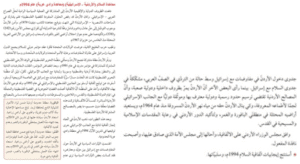
History of Jordan, Grade 11 (Academic Track), Vol. 2, 2024, pp. 37-38.
These instances of targeted removals and modifications across curricula demonstrate how some Middle Eastern countries have attempted to align their curricula with international standards, whereas others have introduced regressive content as part of reform efforts. Saudi Arabia’s modifications align with the trajectory of the Egyptian curriculum, as both aim to incorporate international values into their respective education systems, despite Saudi Arabia pursuing more selective and less holistic reforms, demonstrated through retaining gender stereotypes in the curriculum. It is clear that not all forms of curricular reform are inherently positive, as demonstrated by Jordan’s continued inclusion of antisemitic and violent content in its textbooks.
The Syrian trajectory:
Curricular overhaul and modification represent two primary forms of educational reform currently observed across the Middle East. With the emergence of a new regime in Syria, it will be important to monitor how the country’s educational landscape evolves. The following examples illustrate regressive ideas, comparable in their backward orientation to those seen in the Assad curriculum, though these examples introduce an Islamized element. It remains to be seen whether further reforms will align with the progressive or regressive models of overhaul or modification identified elsewhere in the region.
Thus far, the regime has placed heavy emphasis on changes to counteract the Assad regime’s influence on education.[10] Following nearly 14 years of conflict, the rise of Hay’at Tahrir al-Sham (HTS) in Syria has led to a significant number of educational reforms in a document published by the new Minister of Education, Nadhir Al-Qadiri, reflecting a reshaping of Syrian society. The reforms include officially declared and undeclared directives to be incorporated into the curriculum: officially declared directives consist of replacing the official Syrian flag with the revolution’s flag, referring to the Ottoman Empire as a “regime” or “sultanate” instead of an “occupation,” and removing nationalistic (civic) studies. Undeclared directives consist of the removal of Assad-associated content, and the Islamization of the curriculum. These directives reflect the politicization of the curriculum in alignment with the new regime’s political agenda, most notably seen in the removal of content associated with the Assad era.[11]
Specifically, images of the Syrian flag in Mathematics and Chemistry textbooks have been replaced with that of the regime flag, and references to the “Ottoman occupation” have been replaced with the phrase “Ottoman regime” which is indicative of potential ties between Syria and Turkey. The curriculum reform also extends to the removal of historic and national figures, such as Abu Khalil al-Qabbani, Sulaiman al-Issa and Nazik al-Abid, from social studies textbooks. In addition, the definition of a martyr has been changed from one who dies defending the homeland, to one who dies to “raise God’s word,” indicating a religious addition to the curriculum, in accordance with Islamic values. This reflects a revolutionary regime shift and a corresponding paradigm change, marked by the deliberate removal of content related to the previous Assad regime. While many curricular modifications are politically motivated, this case represents an explicit and comprehensive overhaul of the former regime’s educational narrative.
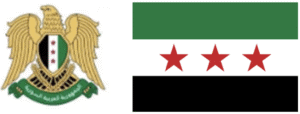
Image: Syrian curriculum guidelines enforcing the replacement of the Assad regime’s flag with that of the new regime.
Although Minister Al-Qadiri claimed the curriculum revisions would be limited to correcting inaccuracies in Islamic Education, analysis reveals a far broader reform effort. The changes span multiple subjects and reflect HTS’s continued adherence to Islamist ideology, marked by the Islamification of content and the removal of Assad-era and Western ideas. These early revisions highlight the new regime’s ideological priorities and signal a wider political and educational shift in Syria. Political shifts are also reflected in the curriculum, for instance, the change in phrasing from ‘Ottoman occupation’ to ‘Ottoman regime,’ a subtle but deliberate adjustment that signals the potential for closer Syrian ties with Turkey.
There have already been targeted modifications within the Syrian curriculum aimed at removing content associated with the Assad regime. However, it remains unclear whether a comprehensive overhaul will follow once a new regime is more firmly established. Syria will be a key country to watch in this regard. As the example of the Houthis demonstrates, curriculum changes can be leveraged not only for constructive reform but also to entrench extremist ideologies, promote violence, and advance the political agendas of those in power.
Conclusion:
This piece has examined two distinct forms of educational reform across the Middle East: comprehensive curriculum overhauls and targeted content modifications. These approaches are evident in the evolving curricula of Egypt, Yemen, Jordan and Saudi Arabia.
Curriculum reform across the Middle East serves as a mirror reflecting each nation’s political trajectory, social priorities, and ideological commitments. Through the comparative analysis of overhaul and modification models, it becomes clear that educational reform is neither inherently progressive nor universally aligned with international standards. While countries like Egypt and Saudi Arabia demonstrate meaningful efforts to modernize curricula and promote inclusive values, cases such as Jordan and the Houthi-controlled system in Yemen illustrate how reform can also be used to reinforce intolerance, extremism, and politicized narratives.
Syria now stands at a pivotal moment. The removal of Assad-era content and early signals of ideological reorientation suggest that its educational system is being reshaped in the image of the new regime. However, it remains uncertain whether this transformation will align with progressive, internationally recognized educational values or mirror the regressive, radicalizing overhauls seen elsewhere. This curriculum warrants close scrutiny, not only to assess its alignment with global educational norms, but also to understand the broader political and ideological future Syria may be carving out through its classrooms. As the region continues to evolve, education remains both a battleground and a blueprint for the next generation.
[1] https://carnegieendowment.org/middle-east/diwan/2024/12/bashar-al-assad-of-syria-has-been-ousted-from-power?lang=en¢er=middle-east
[2] https://www.timesofisrael.com/liveblog_entry/report-finds-progress-in-egypts-education-reform-with-students-taught-peace-tolerance/
[3] https://www.impact-se.org/wp-content/uploads/Review-of-Changes-and-Remaining-Problematic-Content-in-EgyptianTextbooks.pdf
[4] https://www.impact-se.org/wp-content/uploads/Review-of-Houthi-Educational-Materials-in-Yemen_2015-19.pdf
[5] https://www.yemenpolicy.org/look-out-your-son-could-be-the-next-martyr-changes-to-north-yemens-school-textbooks/
[6] https://www.vision2030.gov.sa/en
[7] https://www.impact-se.org/wp-content/uploads/Updated-Review-Saudi-Textbooks-2023-24.pdf
[8] https://thearabweekly.com/jordanians-divided-educational-reform
[9] https://www.impact-se.org/wp-content/uploads/Jordanian-Education-Report.pdf
[10] https://www.bbc.com/news/articles/c1ln12056ppo
[11] https://www.impact-se.org/wp-content/uploads/A-Review-of-Hayat-Tahrir-al-Shams-Intended-Changes-to-the-Syrian-Curriculum.pdf