IMPACT-se’s latest report offers a nuanced look at over 100 Kazakhstani school textbooks used from Grades 2 to 11, examining how they portray Jews, Judaism, Israel, and the Arab-Israeli conflict. The findings reflect Kazakhstan’s commitment to promoting religious and cultural tolerance. Judaism is introduced respectfully as part of the country’s multicultural makeup, with textbooks highlighting Jewish beliefs, rituals, scripture, and contributions to global civilization. Students are encouraged to value interfaith harmony, and there are clear efforts to distinguish religious conservatism from extremism.Textbooks also acknowledge antisemitism and the Nazi genocide of Jews, though key terminology such as “Holocaust,” “concentration camps,” and “ghetto” is absent—signaling a need to deepen Holocaust education. Portrayals of Israel vary: while upper-grade books offer thoughtful, even admiring accounts (including Israel’s revival of Hebrew), others contain inaccuracies and one-sided framing of the Arab-Israeli conflict. The report recognizes a strong foundation for promoting peace and inclusion in Kazakhstan’s education system, while encouraging further alignment with international standards of tolerance and historical accuracy.

Israel and Jews in Kazakhstan’s Education
November 7, 2025
Recommended Research
REGIONS
IMPACT-se’s latest report offers an in-depth analysis of German textbooks, examining their presentation of Jews and Jewish life, the Holocaust and the Israeli-Palestinian conflict.
The report finds that Jewish history and contemporary Jewish life are presented as an integral
IMPACT-se has just published the first in-depth analysis of Syria’s school curriculum since the al-Sharaa administration came to power. The landmark report examines 130 textbooks for Grades 1–12, revealing how the new Syria is reshaping education for the next generation.
The
In an article for Taiwan insight, Tuyuq Rabay examines efforts to give Indigenous heritage a greater place in Taiwan’s schools. At one elementary school, students learn about ancestral history, language, and cultural traditions through forest walks, storytelling, and activities
As Houthi violence continues to make headlines, its roots can be seen by analyzing Houthi educational materials from a decade ago.
In mathematics materials from 2015–2019 documented by IMPACT-se, children learn numbers by counting images bearing the Houthi slogan, which includes
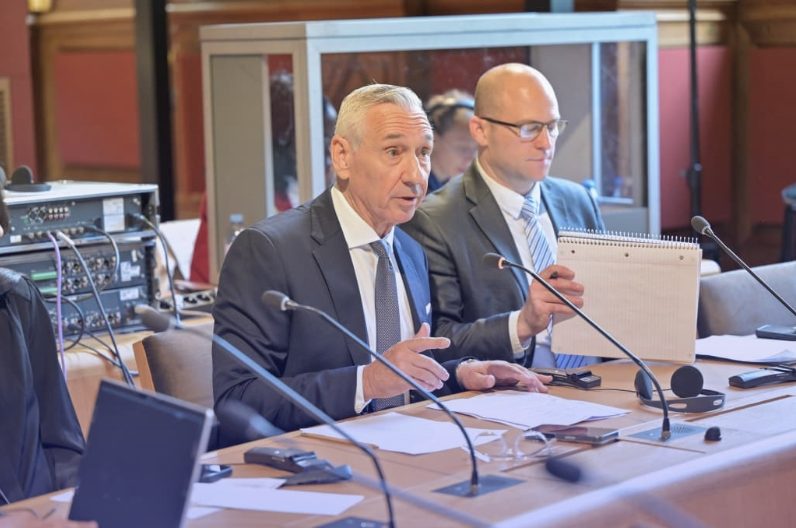
Last week, IMPACT-se CEO Marcus Sheff addressed parliamentarians and policymakers at the House of Lords in London and the French Senate in Paris as part of a delegation of experts on countering extremism, facilitated by @TrendsRA_
Marcus highlighted the essential role of
In a recent article for @NRO, Perpperdine Univeristy (@pepperdine) President Jim Gash and Jeremy Tate, founder of the @CLT_Exam challenge the idea that schools should teach students how to think, rather than what to think.
They argue that education is never entirely neutral:
We are pleased to share that IMPACT-se participated in the 5th Paris Conference on Education (PCE2026), hosted by the The International Academic Forum (@iafor) at Sorbonne University.
Bringing together scholars, educators and policymakers from around the world, the conference
In a recent interview with @dailystarnews, Shireen Huq, a prominent women’s rights activist in Bangladesh, raises important questions about gender and inclusion in education—from the stereotypes embedded in what girls and boys are taught, to body shaming in textbooks and the role